Language can be tricky. Small spelling differences often change meanings entirely—and one of the most common examples is “cacoon or cocoon”
At first glance, both seem right. But in English, one is correct.
In this comprehensive guide, you’ll discover:
1:What a cocoon really is and how it functions work
2:Why “cacoon” isn’t always a typo
3:difference between cocoon and a chrysalis
4:How to use cocoon as a noun and a verb
5:Synonyms, origins, and figurative meanings
6:Clear examples, tables, and a short FAQ section
Let’s unwrap the mystery—thread by thread.
Understanding What a Cocoon Really Is
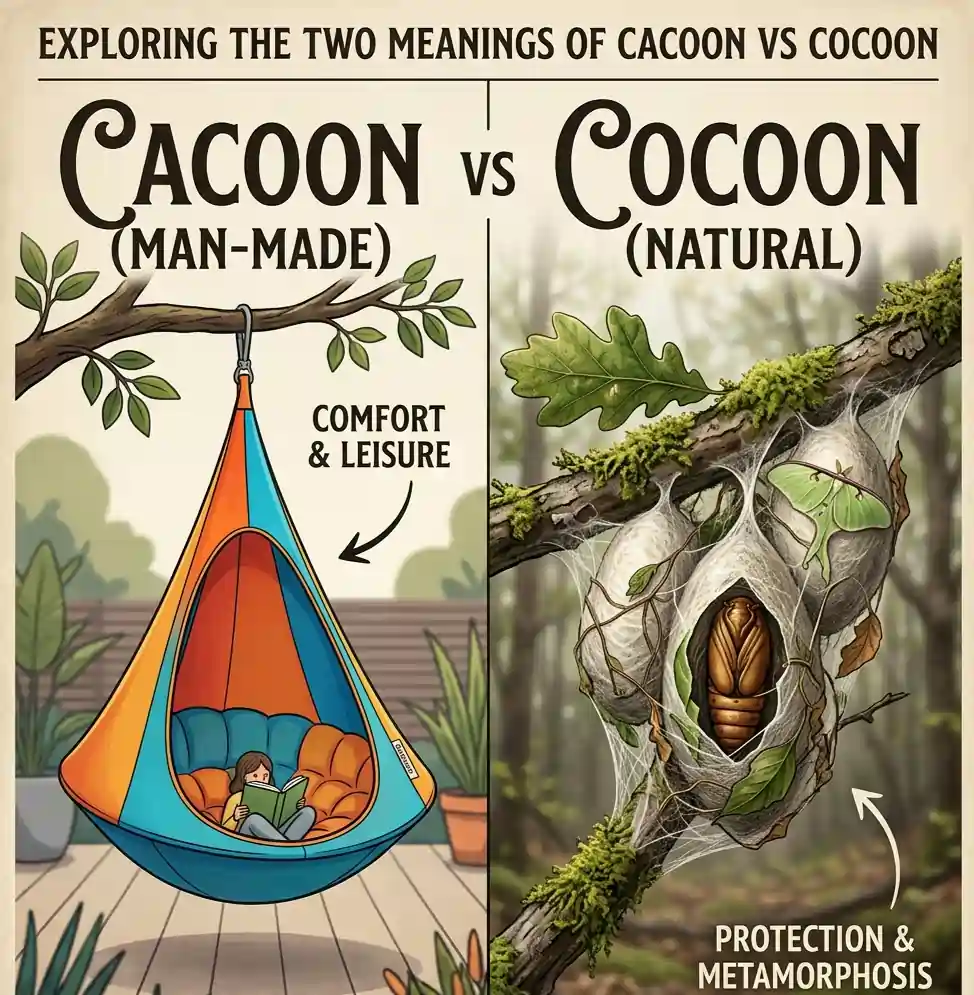
A cocoon is a silken protective case that certain insect larvae, particularly moths, spin around themselves before entering the pupal stage. It’s like nature’s sleeping bag.
In biological terms, a cocoon serves as a barrier against predators, weather, and parasites while the insect undergoes metamorphosis.
Key Facts About Cocoons:
Made by: Moths, silkworms, and some other insects
Material: Fine silk threads produced from salivary glands
Purpose: Protection during metamorphosis
Duration: Can last days to months depending on species
Insect type |
Moths |
Butterflies |
|
What it is made of |
Silk made by larva |
Outer structure very hard |
|
Purpose |
Protective covering for pupa |
Outer shell of pupa itself |
|
Example |
Cocoon of silk worm |
Chrysalis of monarch butterfly |
Cocoon is a French word, cocoon is derived from this. Which means protective barrier.
From larva to moth
One of nature’s most amazing things is metamorphosis. Wings do not grow on a moth overnight. Its process consists of stages present inside the cocoon.
Life cycle of a moth
Egg: Female moth lays eggs on leaves.
Pupa: Becomes a pupa and spins a silk covering.
Larva: A caterpillar emerges from the egg and eats a lot.
Adult moth: Moth comes out of the cocoon when it is completely ready
The insect’s body completely reorganizes during the pupal stage. It transforms itself into a winged adult insect and ends its old form. If there is no protection of the cocoon, then predators and then any bad weather destroys this extremely delicate process.
Nature hides the biggest transformation of science inside a simple silk covering.
Cocoon vs. Chrysalis
1:Although these two are not the same thing, people still use them together, cacoon and chrysalis.
2:Cocoons are made by moths.
3:Chrysalises are made by butterflies.
4:The outer covering made from silk is a cacoon. But chrysalis is its inner shell which the caterpillar makes from its own skin.
An easy way to remember
Cocoons are made by moths while chrysalises are made by butterflies.
Here I show you a diagram that you can keep in mind.
caterpillar → (chrysalis/cocoon stage) → butterfly or adult moth

Cocoon is the correct spelling, writing cacoon in English is absolutely wrong. It can be written in one very rare case, I will tell you about that later.
Why people make a mistake in writing this
When spoken, the sound of cacoon or cocoon is absolutely the same.
Writing the letter a after c feels completely natural, because of which we get confused.
Oxford English Dictionary, Merriam-Webster, in both of these there is only cocoon.
Example sentence
This is correct that silkworm spun a cocoon around itself.
This is wrong that silkworm spun a cacoon around itself
Way to remember
You just think a little about a cozy cocoon. If you look at it, co comes at the start of both. And in both, a feeling of comfort and peace is felt.
Cocoon word apart from biology
The word cocoon is not used only for insects. Rather, it also keeps a deep connection with humans, their emotions and their lifestyle.
Figurative meaning
safety: a safe and personal place
comfort: being wrapped in warmth
isolation: staying alone away from the world for self-care
example
After a stressful month, she took the mobile in hand and wrapped herself in a blanket.
Before launching publicly, the startup worked in a safe environment
Cultural use
Trend forecaster Faith Popcorn made this trend in the 1980s, keeping oneself away from the outside world and staying at home only is the meaning of cocooning.
Hearing phrases like this is very common nowadays:
digital cocooning: getting lost in the online environment
emotional cocooning: keeping oneself away from a life full of stress
The word cacoon has another meaning too
If you look at it, cacoon is only because of a spelling mistake of cocoon. But in some places, this word actually exists.
In some parts of Africa and the Caribbean, the word cacoon means sea heart plant or it is also called monkey ladder
Fact about the cacoon plant
scientific name: entada rheedii
native regions: caribbean, tropical africa
seed pods: the seeds can even float on top of oceans.
traditional use: used as a medicine for inflammation and muscle pain
example
It is used as a natural remedy and cacoon tea is also made from the vine’s dry seeds.
But cacoon is absolutely not the correct spelling for the insect’s protection. However, this is not the meaning that most English people keep among themselves.
Word |
Meaning |
|
cocoon |
silk covering spun by larva |
|
chrysalis |
outer hard shell |
|
pupa |
transitional stage of an insect’s transformation |
|
wrap |
to cover |
|
swaddle |
to wrap tightly |
|
pod |
pod |
How to use cocoon as a verb?
You can use cocoon as a verb . Its literal meaning is to cover.
verb forms
base: cocoon
past: cocooned
continuous: cocooning
example
the small baby was cocooned in a soft blanket
to end stress, cocooned away from mobile.
synonyms:
encase
enclose
wrap up
insulate
Choosing the correct word every time
Use cocoon when an insect’s silk covering is mentioned.
Use the word cacoon only when mentioning entada rheedii.
Do not mix up the spelling of cacoon or cocoon with each other
readmore
faqs about cacoon or cocoon
conclusion
if looked at cacoon or cocoon look absolutely the same but their spellings are absolutely not the same. for the silk covering cocoon are the correct spellings. while cacoon is completely opposite to it and is used to call a tropical plant’s name. language always keeps changing with changing time but we should pay attention to spelling and correctness.